 9,1
9,1

 Sleep aids
 Snoring
 Mouth guard
 Teeth Whitening Tray
 Maintenance & Cleaning
 Sleep Toolbox
Earplugs for sleeping
Earplugs for Sleeping
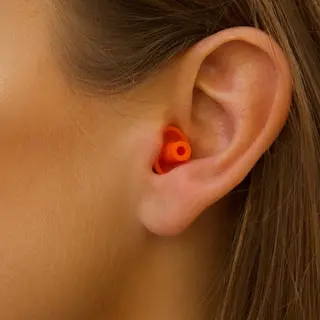
Good sleep needs quiet. Yet traffic, neighbours, hotel noise, housemates or unfamiliar sleeping places can make it harder to fall asleep and stay asleep. Earplugs for sleeping help reduce disturbing background noise and make your sleeping environment calmer.
At Sleep Coach, you will find sleep earplugs with realistic expectations: they can reduce noise, but they cannot block every sound completely. Especially with loud or very close snoring, honest expectations are important.
When are earplugs for sleeping useful?
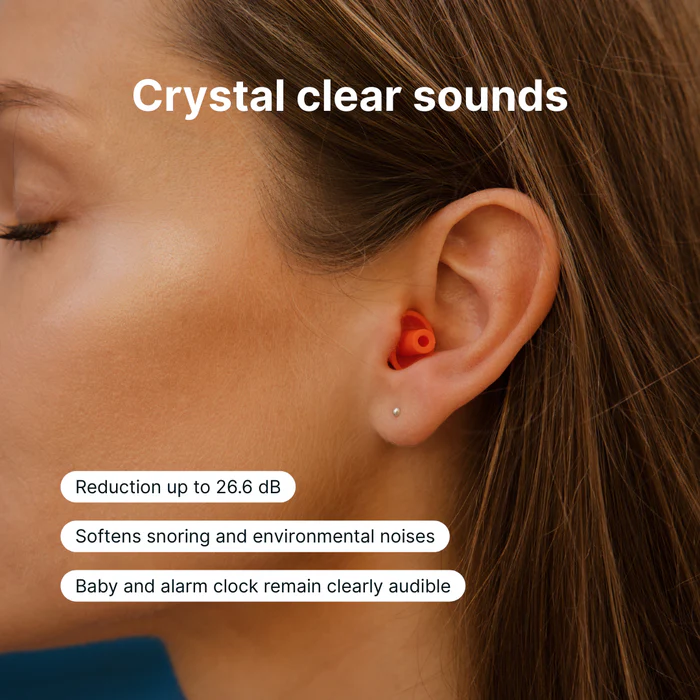
Sleep earplugs are especially useful when you are disturbed by general background noise. They can help make sounds feel less intrusive, allowing your body to settle more easily.
- for traffic noise or city sounds
- for noise from neighbours or housemates
- in hotels, holiday homes, motorhomes or while travelling
- for daytime sleep due to shift work
- in unfamiliar sleeping places
- for light noise disturbance during the night
Honest advice about earplugs and snoring
Earplugs can sometimes reduce snoring sounds, but they are not a reliable solution for loud or very close snoring. Snoring is often low, irregular and comes from a short distance. That is why no universal earplug can reliably block heavy snoring completely.
In short: earplugs are mainly intended for background noise. If snoring is the main problem, they may offer support, but they do not replace a targeted snoring solution.
For regular snoring, Sleep Coach also offers targeted solutions such as snoring mouthpieces and nasal dilators.
Earplugs and teeth grinding
Earplugs do not prevent teeth grinding and do not protect the teeth. For that, a suitable night guard is needed. However, earplugs can be useful for the partner of someone who grinds their teeth, because they can reduce the disturbing grinding sound.
The right approach: the person who grinds their teeth protects them with a night guard. The partner can use earplugs to reduce the grinding sound.
Which earplugs will you find here?
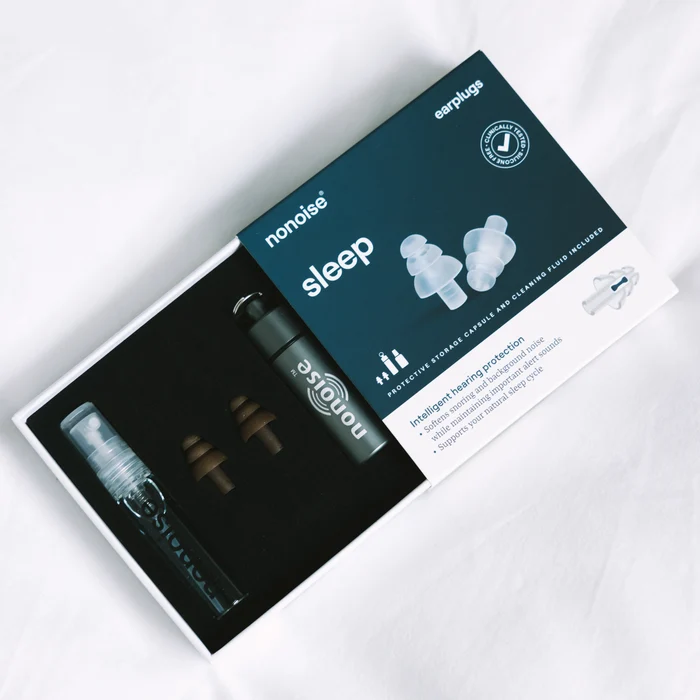
In this category, you will find earplugs designed specifically for sleeping. They are made to reduce disturbing sounds without unnecessarily closing you off from your surroundings. This is especially useful when important sounds, such as an alarm clock, should remain noticeable.
Who are sleep earplugs suitable for?
- for light sleepers
- for people who sleep poorly while travelling
- for shift workers and daytime sleepers
- for people living in noisy surroundings
- for hotel nights, camping or unfamiliar sleeping places
- for partners of people who occasionally snore or grind their teeth
What should you look for when buying?
Important factors are a comfortable fit, good hygiene, realistic noise reduction and comfort throughout the night. Side sleepers in particular should make sure that the earplugs do not create uncomfortable pressure.
Do not expect complete silence. Good sleep earplugs reduce noise, but they do not replace a quiet sleeping environment or a targeted solution for heavy snoring.
Conclusion
Earplugs for sleeping are a practical sleep aid for disturbing background noise. They are useful for travel, traffic noise, neighbours, hotels, daytime sleep and unfamiliar sleeping places. At Sleep Coach, we deliberately use an honest positioning: more peace while sleeping, without exaggerated anti-snoring promises.
Frequently asked questions about earplugs for sleeping
Do earplugs help against snoring?
Earplugs can sometimes reduce snoring sounds, but they are not a reliable solution for loud or very close snoring. They are mainly intended for general background noise.
Can I still hear my alarm clock with earplugs?
That depends on the volume of your alarm clock, your sleep and how the earplugs fit. Many sleep earplugs reduce sound, but do not block it completely.
Are earplugs for sleeping suitable for side sleepers?
That depends on ear shape, pillow and sleeping position. If earplugs cause pressure or pain while sleeping on your side, they are less suitable for you.
Can I use earplugs every night?
Yes, if they fit well and are cleaned regularly. If you experience pain, irritation or pressure, you should stop using them.
Do earplugs help with teeth grinding?
They do not prevent teeth grinding and do not protect the teeth. A night guard is needed for that. Earplugs can only help reduce grinding sounds for the partner.
Suitable solutions: snoring mouthpieces | nasal dilators | night guards
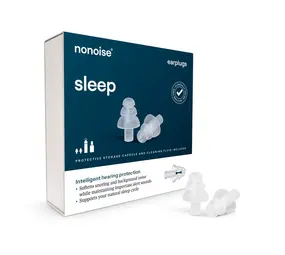
NoNoise Sleep Earplugs reduce disturbing background noise while sleeping, without completely closing you off from your s...
NoNoise Sleep Earplugs re...
Earplugs for Sleeping
Good sleep needs quiet. Yet traffic, neighbours, hotel noise, housemates or unfamiliar sleeping places can make it harder to fall asleep and stay asleep. Earplugs for sleeping help reduce disturbing background noise and make your sleeping environment calmer.
At Sleep Coach, you will find sleep earplugs with realistic expectations: they can reduce noise, but they cannot block every sound completely. Especially with loud or very close snoring, honest expectations are important.
When are earplugs for sleeping useful?
Sleep earplugs are especially useful when you are disturbed by general background noise. They can help make sounds feel less intrusive, allowing your body to settle more easily.
- for traffic noise or city sounds
- for noise from neighbours or housemates
- in hotels, holiday homes, motorhomes or while travelling
- for daytime sleep due to shift work
- in unfamiliar sleeping places
- for light noise disturbance during the night
Honest advice about earplugs and snoring
Earplugs can sometimes reduce snoring sounds, but they are not a reliable solution for loud or very close snoring. Snoring is often low, irregular and comes from a short distance. That is why no universal earplug can reliably block heavy snoring completely.
In short: earplugs are mainly intended for background noise. If snoring is the main problem, they may offer support, but they do not replace a targeted snoring solution.
For regular snoring, Sleep Coach also offers targeted solutions such as snoring mouthpieces and nasal dilators.
Earplugs and teeth grinding
Earplugs do not prevent teeth grinding and do not protect the teeth. For that, a suitable night guard is needed. However, earplugs can be useful for the partner of someone who grinds their teeth, because they can reduce the disturbing grinding sound.
The right approach: the person who grinds their teeth protects them with a night guard. The partner can use earplugs to reduce the grinding sound.
Which earplugs will you find here?
In this category, you will find earplugs designed specifically for sleeping. They are made to reduce disturbing sounds without unnecessarily closing you off from your surroundings. This is especially useful when important sounds, such as an alarm clock, should remain noticeable.
Who are sleep earplugs suitable for?
- for light sleepers
- for people who sleep poorly while travelling
- for shift workers and daytime sleepers
- for people living in noisy surroundings
- for hotel nights, camping or unfamiliar sleeping places
- for partners of people who occasionally snore or grind their teeth
What should you look for when buying?
Important factors are a comfortable fit, good hygiene, realistic noise reduction and comfort throughout the night. Side sleepers in particular should make sure that the earplugs do not create uncomfortable pressure.
Do not expect complete silence. Good sleep earplugs reduce noise, but they do not replace a quiet sleeping environment or a targeted solution for heavy snoring.
Conclusion
Earplugs for sleeping are a practical sleep aid for disturbing background noise. They are useful for travel, traffic noise, neighbours, hotels, daytime sleep and unfamiliar sleeping places. At Sleep Coach, we deliberately use an honest positioning: more peace while sleeping, without exaggerated anti-snoring promises.
Frequently asked questions about earplugs for sleeping
Do earplugs help against snoring?
Earplugs can sometimes reduce snoring sounds, but they are not a reliable solution for loud or very close snoring. They are mainly intended for general background noise.
Can I still hear my alarm clock with earplugs?
That depends on the volume of your alarm clock, your sleep and how the earplugs fit. Many sleep earplugs reduce sound, but do not block it completely.
Are earplugs for sleeping suitable for side sleepers?
That depends on ear shape, pillow and sleeping position. If earplugs cause pressure or pain while sleeping on your side, they are less suitable for you.
Can I use earplugs every night?
Yes, if they fit well and are cleaned regularly. If you experience pain, irritation or pressure, you should stop using them.
Do earplugs help with teeth grinding?
They do not prevent teeth grinding and do not protect the teeth. A night guard is needed for that. Earplugs can only help reduce grinding sounds for the partner.
Suitable solutions: snoring mouthpieces | nasal dilators | night guards